
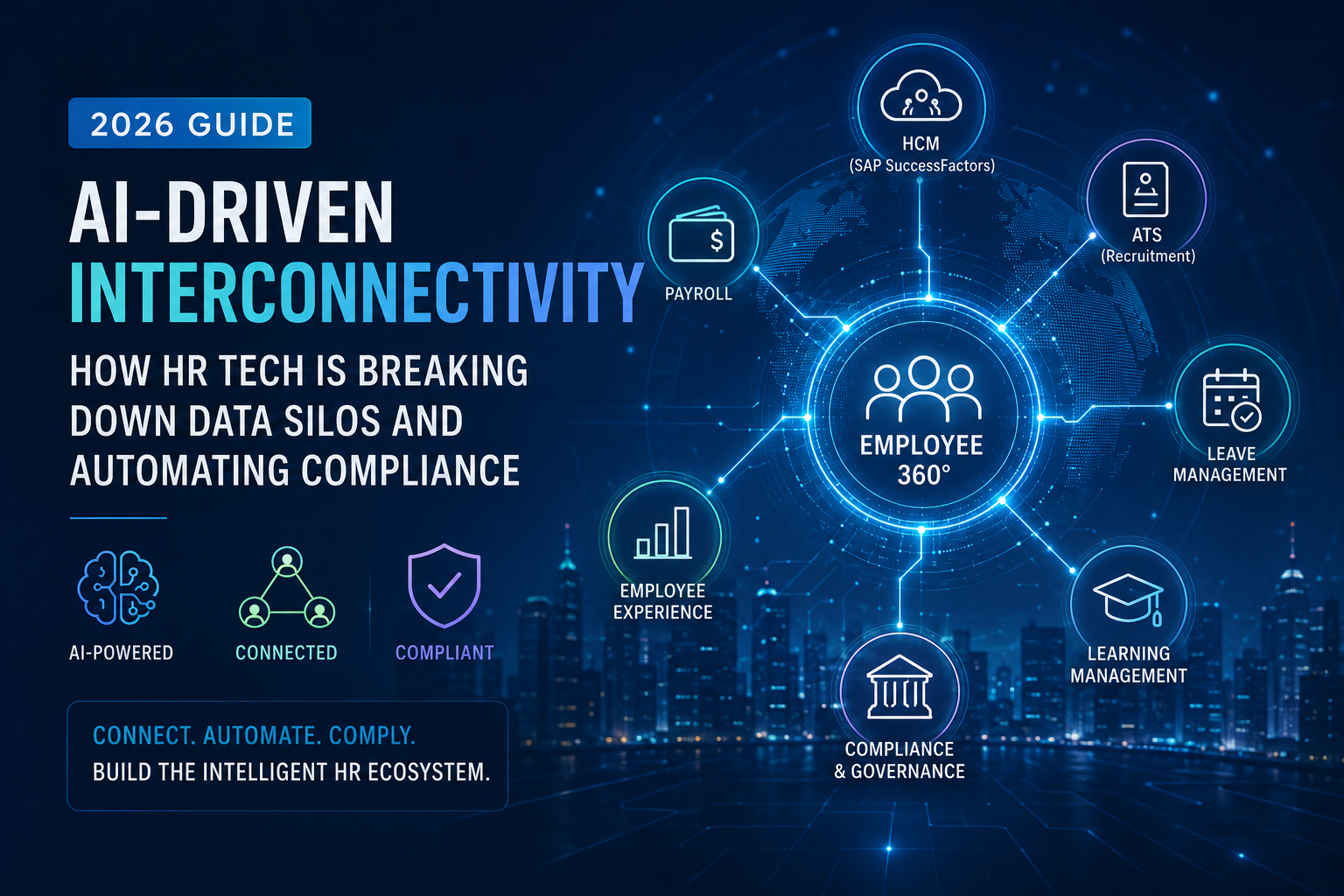
The End of HR Technology Silos
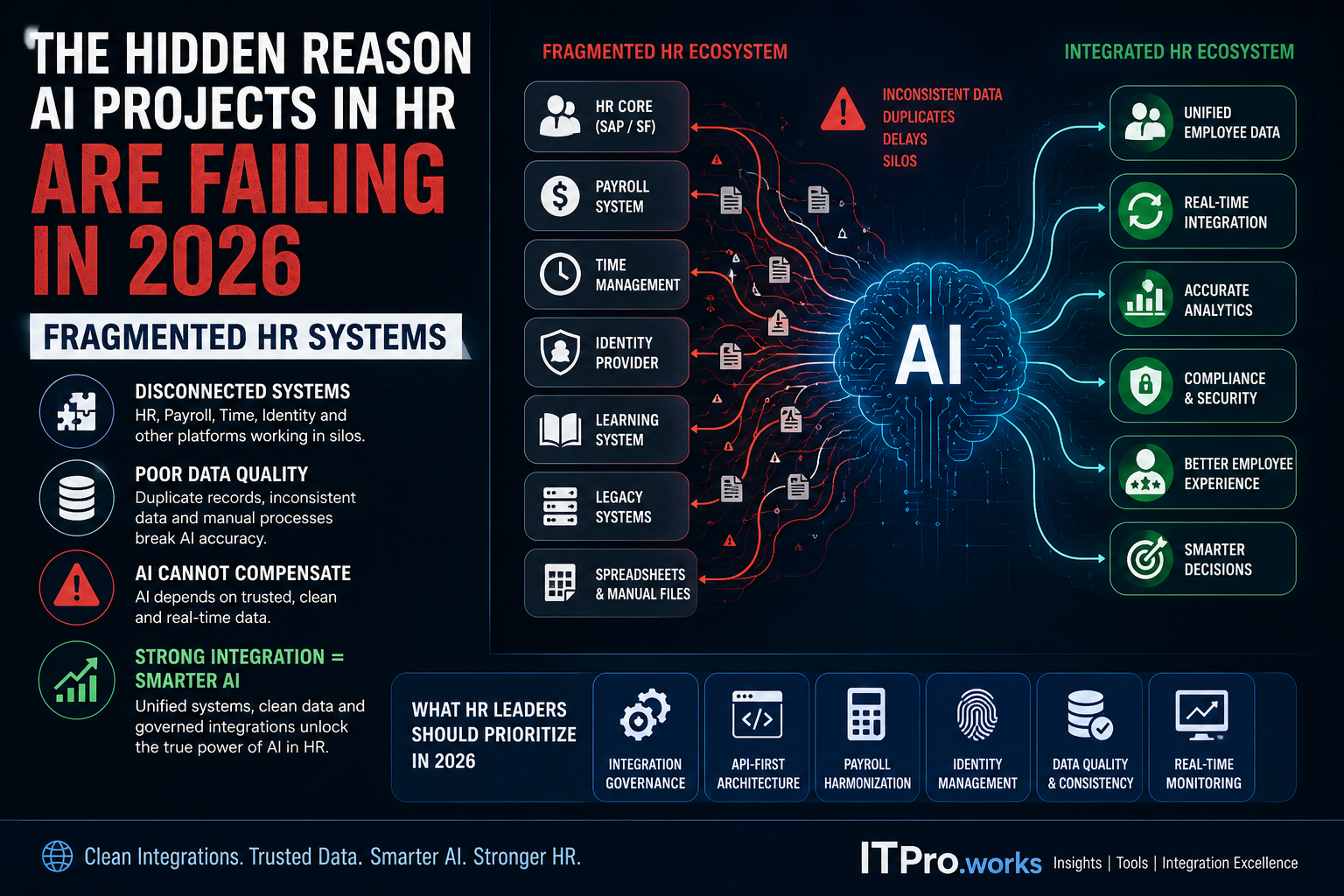
forms, Applicant Tracking Systems (ATS), payroll engines, learning systems, employee experience applications, and workforce analytics tools. Yet despite billions spent globally on HR technology, many organizations continue to struggle with fragmented data, duplicate processes, inconsistent employee records, and compliance risks.
According to recent industry research, only approximately 43% of organizations consider their HR technology ecosystem effective in supporting business objectives. The remaining majority face challenges related to integration complexity, poor data quality, disconnected workflows, and rising administrative overhead.
As organizations move into 2026, Artificial Intelligence (AI) combined with modern integration platforms is transforming how HR systems communicate. Instead of isolated applications operating independently, enterprises are building interconnected ecosystems where data flows automatically, compliance is continuously monitored, and employees experience seamless digital interactions.
The result is a fundamental shift toward AI-driven interconnectivity.
Understanding AI-Driven Interconnectivity
AI-driven interconnectivity refers to the intelligent integration of multiple HR and enterprise systems through APIs, middleware, machine learning, and automation technologies.
Rather than relying solely on scheduled data transfers or manual updates, AI-enabled integration architectures can:
- Detect anomalies in employee data
- Recommend corrective actions
- Automatically synchronize records across platforms
- Trigger workflows based on business events
- Monitor compliance requirements in real time
- Predict integration failures before they occur
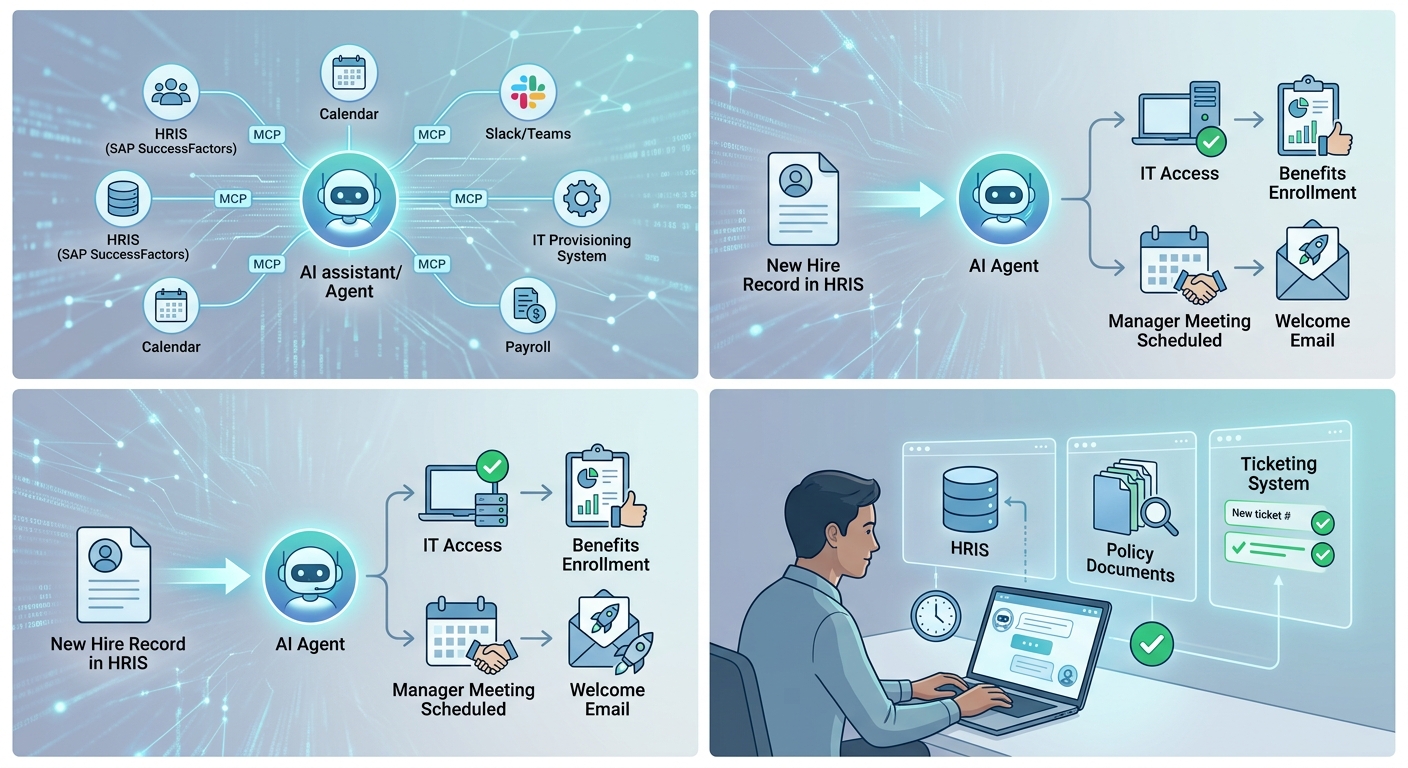
In practical terms, this means that a hiring event entered into an ATS can automatically create employee records in the HCM platform, provision access through Identity Management systems, trigger payroll setup, initiate learning assignments, and notify managers—all without human intervention.
The focus shifts from simple system integration to intelligent process orchestration.
Why HR Technology Fragmentation Remains a Major Challenge
Most enterprises today operate a complex landscape of applications:
- HCM Systems
- Payroll Platforms
- Recruitment and ATS Solutions
- Learning Management Systems
- Performance Management Applications
- Identity and Access Management Platforms
- Time and Attendance Systems
- Employee Experience Platforms
- ERP Systems
Each application often contains overlapping employee data.
When information exists in multiple locations, organizations face challenges such as:
Data Inconsistency
An employee may have different job titles, reporting lines, or compensation information across systems.
Compliance Risks
Regulatory requirements such as GDPR, PDPA, labor laws, tax reporting obligations, and payroll regulations require accurate and synchronized employee information.
Increased Administrative Costs
HR teams frequently spend significant time reconciling records, correcting errors, and responding to data discrepancies.
Poor Employee Experience
Employees expect modern consumer-grade experiences. Re-entering the same information across multiple systems creates frustration and reduces trust in HR technology.
Industry research from organizations such as SHRM and Deloitte consistently identifies employee experience, data quality, and automation as top priorities for HR leaders globally.
How AI Connects Disparate HR Platforms
Modern AI-powered integration architectures connect systems through APIs, middleware platforms, event-driven processing, and intelligent workflow engines.
Consider a typical ecosystem:
Core Systems
- SAP SuccessFactors
- Workday
- Oracle HCM
Talent Acquisition
- Greenhouse
- SmartRecruiters
- iCIMS
Payroll
- ADP
- SAP Payroll
- Local payroll providers
Employee Experience
- Microsoft Viva
- ServiceNow Employee Center
- Qualtrics
Leave and Time Management
- Kronos
- UKG
- Regional workforce systems
AI can monitor transactions across these systems and automate decision-making.
For example:
- Employee is hired in ATS
- AI validates mandatory data
- Employee profile created in HCM
- Payroll account generated automatically
- Manager assigned equipment workflow
- Compliance checks executed
- Learning plans assigned
- Access rights provisioned
What previously required multiple teams and manual coordination can now occur within minutes.
Automating Compliance Through Intelligent Workflows
Compliance management remains one of the strongest use cases for AI-enabled HR integrations.
Organizations operating across Southeast Asia often face complex requirements involving:
- Malaysia EPF and SOCSO regulations
- Singapore CPF requirements
- Thailand labor regulations
- Indonesia payroll compliance
- GDPR obligations for global operations
AI-enabled systems can automatically:
Monitor Missing Employee Information
If mandatory tax identifiers are absent, workflows can notify HR and prevent payroll processing.
Detect Regulatory Violations
AI models can identify unusual working patterns, overtime exceptions, or missing certifications.
Automate Audit Trails
Every integration event can be logged, timestamped, and tracked for audit purposes.
Validate Data Before Processing
Instead of discovering errors after payroll execution, AI can identify issues during data transmission.
For integration specialists working with XML payloads, API transformations, and structured data validation, tools such as the XML utilities available at ITPRO.works XML Tools can simplify payload analysis and troubleshooting during implementation projects.
The ROI of Connected Employee Experiences
Many executives still view HR technology investments primarily as operational expenses.
However, modern organizations increasingly recognize the direct financial impact of employee experience.
Research from organizations including Gallup has shown that highly engaged employees contribute to stronger productivity, lower turnover, improved customer satisfaction, and higher profitability.
AI-driven interconnectivity contributes by:
Reducing Manual Work
HR professionals spend less time on administrative tasks and more time on strategic initiatives.
Accelerating Hiring
New hires become productive faster through automated onboarding processes.
Improving Data Accuracy
Cleaner data improves workforce planning and decision-making.
Enhancing Employee Satisfaction
Employees interact with a consistent and reliable digital workplace.
Organizations that successfully modernize their HR technology ecosystems often see measurable improvements in:
- Time-to-hire
- Payroll accuracy
- Employee engagement
- Compliance readiness
- Operational efficiency
Future Trends for 2026–2027
Several trends are expected to shape the next phase of HR technology evolution.
Agentic AI in HR Operations
AI agents will increasingly perform administrative activities independently while maintaining governance controls.
Event-Driven Architectures
Organizations will move away from batch integrations toward real-time event processing.
Predictive Compliance
AI models will identify compliance risks before violations occur.
Unified Employee Data Platforms
Organizations will consolidate fragmented workforce information into centralized intelligence layers.
Integration as a Strategic Capability
Integration teams will become increasingly important as enterprises prioritize connected digital ecosystems.
Actionable Recommendations for IT Teams
Organizations preparing for the next generation of HR technology should consider the following:
1. Assess Integration Maturity
Identify disconnected systems and prioritize high-value integrations.
2. Standardize APIs
Adopt API-first architectures whenever possible.
3. Invest in Middleware Platforms
Solutions such as SAP Integration Suite provide scalability and governance.
4. Establish Data Ownership
Define clear accountability for employee data quality.
5. Introduce AI Incrementally
Start with compliance monitoring, anomaly detection, and workflow automation.
6. Monitor Employee Experience Metrics
Measure how integration improvements affect employee satisfaction and productivity.
7. Build Internal Expertise
Develop capabilities in APIs, middleware, AI governance, and enterprise architecture.
Conclusion
The future of HR technology is no longer about implementing standalone systems. It is about creating intelligent, interconnected ecosystems that enable data to move seamlessly, automate compliance, and improve employee experiences.
AI-driven interconnectivity is rapidly becoming a competitive advantage. Organizations that successfully integrate their HR technology landscapes will be better positioned to improve operational efficiency, reduce compliance risks, and deliver measurable business outcomes.
As we move into 2026 and beyond, the winners will not necessarily be the organizations with the most systems—but those with the smartest connections between them.
If you found this article valuable and would like to support independent technical research and enterprise integration content, consider supporting the ITPRO.works community at https://itpro.works/support-us/

2 thoughts on “AI-Driven Interconnectivity: How HR Tech is Breaking Down Data Silos and Automating Compliance (2026 Guide)”